

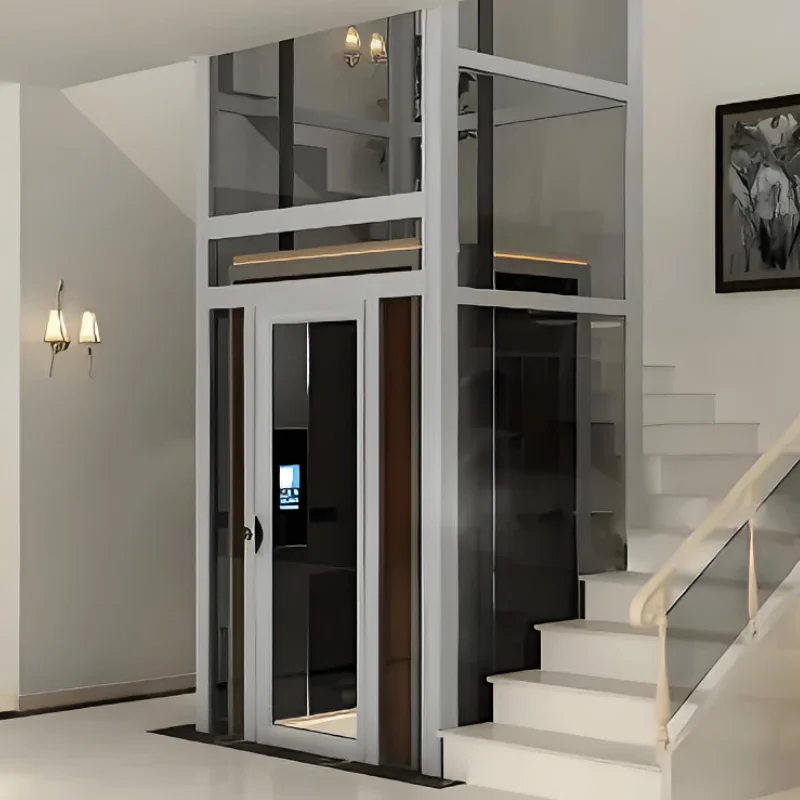
Machine room-less home elevators are becoming a popular choice for modern residential buildings because they combine
space-saving design, smooth vertical transportation, and a cleaner architectural layout. Unlike traditional elevator
systems that require a separate machine room, a machine room-less home elevator places the main lifting components
within the hoistway or directly integrated into the elevator structure. This design reduces the footprint of the
elevator system while offering reliable performance for private homes, villas, duplex apartments, townhouses, and
low-rise residential projects.
For homeowners, architects, builders, and property developers, the advantages of machine room-less home elevators
extend far beyond convenience. They support better space utilization, simplified planning, improved design flexibility,
energy-efficient operation, and easier integration into new builds or renovation projects. As Residential Elevator demand
continues to grow, machine room-less home elevators are increasingly viewed as a practical and future-ready solution.
This page provides a clear, SEO-friendly overview of machine room-less home elevator advantages, technical features,
common specifications, design considerations, and practical applications. It is written for use in blogs, directory pages,
industry pages, and informational landing pages.
A machine room-less home elevator, often abbreviated as MRL home elevator, is a residential elevator system that does
not require a separate machine room above, below, or beside the hoistway. Instead, the drive system, controller, and
other key mechanical components are arranged in a compact configuration, usually inside the shaft or within the upper
part of the hoistway. This makes the elevator system more compact and more suitable for homes where space is limited.
In simple terms, a machine room-less home elevator offers the same basic function as a conventional residential elevator:
safe and comfortable vertical movement between floors. The major difference is that the elevator equipment is integrated
into the structure more efficiently, making the overall installation less intrusive and easier to adapt to residential
architecture.
The demand for machine room-less home elevators has increased due to changing residential design preferences and the
growing need for accessibility in private housing. Many homeowners now want a home elevator that supports aging in place,
improves mobility for family members, and adds property value without consuming valuable living space.
Machine room-less home elevators are especially attractive in urban housing, compact villas, and modern renovation projects
because they reduce structural complexity. They also help designers create elegant interiors with fewer visible mechanical
elements. For these reasons, MRL home elevators are often chosen as a long-term accessibility and lifestyle upgrade.
| Advantage | SEO-Friendly Description | Homeowner Benefit |
|---|---|---|
| Space Saving | No separate machine room is required, which helps preserve usable floor area and building footprint. | More usable living space and easier layout planning. |
| Flexible Installation | MRL home elevators can be adapted to many residential layouts, including new builds and renovations. | Easier to install in homes with limited structural room. |
| Modern Aesthetics | The compact design creates a cleaner architectural appearance with less visible equipment. | Improves interior style and home value. |
| Energy Efficiency | Many machine room-less home elevators are designed with efficient drive systems and optimized operation. | Lower running costs and better long-term efficiency. |
| Accessibility Support | Residential elevators improve mobility for elderly users, children, and people with reduced mobility. | Safer and more comfortable movement between floors. |
| Lower Structural Demand | Because no machine room is needed, the building design can be simpler and more compact. | Less architectural disruption and easier planning. |
| Property Value Enhancement | A well-designed home elevator can increase the appeal of a residential property in the market. | Higher resale attractiveness and premium positioning. |
| Quiet Operation | Advanced residential elevator systems are often engineered for smooth and low-noise performance. | Better comfort in daily home use. |
One of the biggest advantages of machine room-less home elevators is their space-saving design. Traditional elevators
often require a machine room, which takes up valuable square footage and limits planning flexibility. By removing this
requirement, MRL home elevators free up space for other residential needs.
This is especially important in private homes where every square meter matters. A machine room-less home elevator can
help preserve storage areas, living rooms, bedrooms, and rooftop functions. In compact homes, this space efficiency can
make the difference between a practical elevator installation and an impractical one.
Home elevator design is different from commercial elevator design. Residential spaces require a balance between function,
comfort, and visual harmony. Machine room-less home elevators are well suited to this environment because they fit more
naturally into modern home layouts.
Their compact configuration allows architects to integrate them into stairwells, corners, and centralized vertical cores.
This makes them ideal for villas, townhouses, duplex homes, and multi-level family residences. As a result, MRL home
elevators are often preferred when the goal is seamless integration rather than a bulky mechanical installation.
A machine room-less home elevator can often be easier to install than a conventional elevator system because it requires
fewer separate structural provisions. This is a major advantage for both new construction and renovation projects.
In new homes, the elevator can be planned into the structure early, allowing efficient use of the shaft and surrounding
space. In existing homes, the absence of a separate machine room can reduce the amount of demolition, reconstruction, and
external modification needed. This makes MRL home elevators a practical choice for homeowners seeking a retrofittable
accessibility solution.
Many homeowners want a home elevator that looks refined and complements the interior design. Machine room-less home
elevators support this goal with a cleaner and more compact appearance. Because the mechanical components are integrated
more efficiently, the elevator system is less visually intrusive.
This is useful in luxury homes, minimalist interiors, and projects where visual balance matters. Glass elevator cabins,
slim shaft structures, and discreet door systems can be combined with MRL technology to create a premium residential
impression. For content targeting interior-focused SEO terms, this is an important keyword theme: modern home elevator
design, Compact Residential Elevator, elegant home lift, and machine room-less elevator aesthetics.
Accessibility is one of the strongest reasons to install a home elevator. Machine room-less home elevators help elderly
users, wheelchair users, and people with reduced mobility move safely between floors. This improves comfort and allows
families to remain in the same home longer as mobility needs change.
Aging in place has become a major residential trend, and home elevators are central to this concept. A machine room-less
home elevator supports independence, reduces stair-related risk, and makes the home easier to use over time. For households
that plan for long-term living, this can be one of the most valuable advantages.
Energy efficiency is another important selling point of machine room-less home elevators. Many systems use compact drive
technologies and optimized control logic to reduce unnecessary energy consumption. Compared with older, larger elevator
arrangements, modern MRL home elevators are often better aligned with residential energy expectations.
Although actual consumption depends on capacity, usage frequency, drive type, and home design, the efficient architecture
of machine room-less systems generally supports lower operational waste. For homeowners interested in sustainable
construction and lower utility costs, this can be a meaningful advantage.
A home elevator should feel comfortable, smooth, and unobtrusive. Machine room-less home elevators are often designed
with residential comfort in mind, meaning quieter operation and smoother travel characteristics. This matters in homes
where the elevator is used frequently throughout the day.
Low-noise performance is especially important in family homes, luxury residences, and multi-story houses where the elevator
is installed close to bedrooms or living areas. A well-engineered MRL home elevator can provide a pleasant ride experience
while minimizing disruption to the household environment.
Another major advantage is lower architectural complexity. Without a machine room, the building design can be simplified
in several ways. This may reduce the need for extra floorspace, structural offsets, and separate access points for the
equipment area.
Simpler design does not mean lower quality. Instead, it means the elevator system is arranged more efficiently. This can
be particularly helpful for projects where the goal is to maintain a compact footprint and avoid unnecessary structural
changes. In residential architecture, simplicity often translates into better usability and cleaner design outcomes.
Because machine room-less home elevators eliminate the need for a separate machine room, project planning can sometimes
be more straightforward. Designers, engineers, and builders may spend less time allocating space for a remote mechanical
area and can focus more on the shaft, doors, and cabin layout.
This can help streamline the early stages of a residential elevator project. Faster planning does not mean automatic
installation, but it can reduce certain coordination challenges, especially in homes where space and structure are already
constrained.
A home elevator can increase the attractiveness of a residential property. Machine room-less home elevators are often seen
as a desirable premium feature because they offer accessibility, convenience, and modern design in one solution.
For real estate and residential development pages, this keyword phrase is useful: home elevator adds property value. Buyers
often appreciate the future usability of a home with elevator access, particularly in multi-level properties. While actual
value impact depends on market conditions, a properly integrated MRL home elevator can make a property more competitive.
Machine room-less home elevators support better space planning both inside and outside the home. Since there is no need
to allocate a separate room for the machine equipment, the designer has greater freedom to preserve storage, roof areas,
exterior facades, or garden-adjacent layouts.
This is especially useful in compact urban housing, where the overall footprint of the building must remain efficient. It
is also helpful in renovations where preserving the original layout matters. In both cases, MRL home elevators allow
vertical access without excessive space consumption.
| Feature | Common Residential Use | SEO Keyword Angle |
|---|---|---|
| Compact Drive System | Supports space-saving installation in private homes. | compact home elevator, machine room-less elevator |
| Cabin Lighting | Improves visibility and user comfort. | home elevator comfort, residential elevator cabin |
| Automatic Doors | Enhances convenience and safety during entry and exit. | automatic home lift door |
| Emergency Backup Options | Supports safe operation during power interruptions. | home elevator safety features |
| Control Panel | Allows easy floor selection and operation. | residential elevator control system |
| Safety Sensors | Helps prevent obstructions and supports safer operation. | elevator safety sensor, home lift safety |
| Custom Cabin Finishes | Matches interior design preferences and home décor. | custom home elevator design |
| Low-Noise Components | Improves residential comfort and reduces disturbance. | Quiet Home Elevator |
| Specification | Typical Residential Range | Notes |
|---|---|---|
| Capacity | 250 kg to 400 kg | Often suitable for 2 to 5 persons, depending on the model and cabin size. |
| Travel Height | Up to 4 to 6 floors | Common for villas, duplex homes, and low-rise residences. |
| Speed | 0.15 m/s to 0.4 m/s | Residential elevators usually prioritize comfort over high speed. |
| Drive Type | Traction, hydraulic, or other compact residential systems | Selection depends on layout, comfort, and installation requirements. |
| Door Type | Automatic or manual, depending on design | Must match safety standards and home usage needs. |
| Cabin Size | Customized to shaft and user requirements | Design can be tailored for accessibility or luxury appearance. |
| Power Supply | Common residential electrical configuration | Depends on regional standards and project conditions. |
| Safety Functions | Overload protection, emergency stop, leveling control, and backup lowering | Exact features depend on system design and compliance requirements. |
| Aspect | Machine Room-Less Home Elevator | Traditional Home Elevator |
|---|---|---|
| Machine Room Requirement | No separate machine room required | Requires an additional machine room space |
| Space Efficiency | Higher space efficiency for residential layouts | Uses more building area overall |
| Design Flexibility | More flexible for compact homes and renovations | More limited by structural space needs |
| Visual Appearance | Cleaner and more modern integration | More visible equipment arrangement |
| Installation Complexity | Potentially simpler planning and structural coordination | More complicated due to machine room allocation |
| Residential Suitability | Highly suitable for homes, villas, and townhouses | Best when extra space is available |
Machine room-less home elevators are suitable for a wide range of residential applications. They are particularly valuable
in:
While the advantages of machine room-less home elevators are significant, it is still important to evaluate the project
carefully. Key considerations include shaft dimensions, travel distance, number of floors, expected frequency of use,
door opening direction, accessibility needs, and available electrical supply.
Homeowners should also consider the long-term use pattern of the elevator. A compact residential elevator designed for
occasional use may differ from one intended for daily multi-user operation. Planning these details early helps ensure the
chosen machine room-less home elevator provides the right balance of comfort, safety, and performance.
Safety is essential in any residential elevator system. Machine room-less home elevators should include appropriate safety
components and comply with applicable local regulations and technical standards. Common safety considerations may include
door interlocks, emergency stop functions, leveling accuracy, overload protection, and backup descent features.
When discussing SEO content for home elevator safety, it is useful to emphasize that a machine room-less design does not
reduce the importance of standards. Instead, it highlights the need for proper engineering, professional installation, and
routine maintenance. Safe operation depends on both product design and correct use.
Machine room-less home elevators can also offer practical maintenance advantages. Because the system is compact and
centrally integrated, some routine service tasks may be more straightforward than in systems with a separate machine room.
In addition, modern residential elevator technology is often designed to support dependable operation with regular
inspections.
Maintenance should always be carried out according to technical requirements and local rules. For homeowners, the key
benefit is that machine room-less home elevators are generally designed to be accessible enough for scheduled servicing
while remaining compact enough for residential environments.
| Primary Keyword | Related Keywords | Content Angle |
|---|---|---|
| machine room-less home elevators | MRL home elevator, residential elevator, home lift | Main topic and page title keyword |
| advantages of machine room-less home elevators | home elevator benefits, compact home elevator, space-saving elevator | Core informational phrase for ranking |
| home elevator for small spaces | compact residential elevator, no machine room elevator | Space-efficiency search intent |
| quiet home elevator | low-noise elevator, smooth residential lift | Comfort and lifestyle search intent |
| home elevator for elderly | accessibility elevator, aging in place lift | Accessibility and mobility search intent |
| residential elevator design | modern home lift, elegant home elevator | Architecture and interior design search intent |
To improve topical relevance and SEO visibility, content about machine room-less home elevators often includes terms such as
residential elevator, home lift, compact elevator, no machine room elevator, private home elevator, accessibility lift,
low-rise elevator, and space-saving vertical transport. These phrases help search engines understand the subject matter
and connect the page with relevant user queries.
Natural keyword variation is important. Instead of repeating the exact same phrase too many times, high-quality content
should use semantic alternatives such as home elevator system, compact residential lift, elevator for villas, and
machine room-less lift for home use. This approach improves readability while supporting strong SEO performance.
The advantages of machine room-less home elevators make them an increasingly popular solution for modern residential
spaces. Their compact design, space-saving structure, flexible installation potential, energy-efficient operation, and
strong accessibility benefits align well with the needs of today’s homeowners and designers.
Whether the project is a new villa, a compact townhouse, a duplex renovation, or a luxury residence, a machine room-less
home elevator can provide a practical and visually refined way to improve mobility and convenience. For users seeking
a balance of functionality, design, and efficient use of space, MRL home elevators represent a smart residential solution.
As a keyword-rich topic for blogs, directory pages, and industry content, machine room-less home elevators offer excellent
search relevance because they connect to major user intents: home accessibility, modern housing design, compact space
planning, and long-term residential comfort.
Trang web này sử dụng cookie để đảm bảo bạn có được trải nghiệm tốt nhất trên trang web của chúng tôi.
 English
 ไทย
ไทย Indonesia
 Filipino



 Điện thoại
Bình luận
(0)